
Cleaning painted walls can remove dust, fingerprints, scuffs, and everyday grime while helping your interior look brighter and better maintained. The key is knowing how to clean the surface without dulling the finish or removing paint.
The best way to clean painted walls is to start with the gentlest method possible. Dust the wall first, then use a soft microfiber cloth or nonabrasive sponge dampened with warm water. If water alone does not remove the dirt, add a small amount of mild, dye-free dish soap.
Always test your cleaning method on a hidden section of the wall before cleaning a larger area. How much moisture and pressure you can safely use will depend largely on the type of paint and finish.
What Is the Best Cleaner for Painted Walls?
For most painted interior walls, warm water and a small amount of mild dish soap is the safest place to start.
You usually do not need a heavy-duty household cleaner. In fact, strong chemicals and abrasive cleaning products can make the problem worse by dulling the finish, creating shiny spots, or removing some of the paint.
Start with:
- Warm water
- Mild, dye-free dish soap
- A soft microfiber cloth or nonabrasive sponge
Use as little cleaning solution as necessary.
For stubborn marks, you may need a slightly stronger cleaning method, but test it first in an inconspicuous area.
Know Your Paint Finish Before Cleaning
Not every painted wall should be cleaned the same way.
The sheen of the paint affects how resistant the surface is to moisture, rubbing, and cleaning products. If you are unsure what is on your walls, our guide to choosing between matte, satin, and gloss paint finishes can help explain the differences.
Flat or Matte Paint
Flat and matte finishes require the most care.
Because these finishes have very little sheen, aggressive rubbing can leave a noticeably shinier spot on the wall. Use a soft microfiber cloth, minimal moisture, and very light pressure.
Avoid scrubbing the surface.
Eggshell Paint
Eggshell is slightly more durable than flat paint but should still be cleaned gently.
Start with water and a microfiber cloth. If necessary, use a small amount of mild dish soap and avoid repeatedly rubbing the same area.
Satin Paint
Satin finishes generally tolerate cleaning better than flat or eggshell paint, which is one reason they are often used in busier areas of the home.
Use warm water and mild soap with a soft sponge or microfiber cloth.
Semi-Gloss and Gloss Paint
Semi-gloss and gloss finishes are typically easier to wipe clean and are commonly used on trim, doors, kitchens, bathrooms, and other areas where surfaces may need more frequent cleaning.
They are more durable, but they can still be scratched by abrasive sponges or cleaners.
What You Need to Clean Painted Walls
You do not need a large collection of cleaning supplies.
For most walls, gather:
- Soft microfiber cloths or nonabrasive sponges
- Warm water
- Mild, dye-free dish soap
- Two buckets or containers
- Clean towels
- Vacuum with a soft brush attachment or a clean duster
- Drop cloth or towels for protecting the floor
- Cleaning gloves, if desired
Use one bucket for your cleaning solution and another for clean rinse water.
Avoid rough scrubbers, steel wool, heavily dyed sponges, and abrasive cleaning pads.
How to Clean Painted Walls Step by Step
1. Remove Dust First
Before washing the walls, remove loose dust, cobwebs, and debris.
You can use a clean microfiber duster or the soft brush attachment on a vacuum. Pay attention to corners, baseboards, areas around vents, and textured surfaces where dust tends to collect.
Cleaning a dusty wall with water can turn loose dirt into streaks or muddy residue.
2. Protect the Room
Move furniture away from the wall and remove pictures, artwork, and other decorations.
Place towels or a drop cloth along the baseboard to catch occasional drips.
3. Test a Hidden Area
Before cleaning the entire wall, test your method behind furniture, artwork, or another inconspicuous location.
Allow the test area to dry.
Check for:
- Paint coming off on the cloth
- Discoloration
- Changes in sheen
- Water marks
- A shiny or dull patch
If you notice any of these changes, stop and use a gentler cleaning method.
4. Start With Warm Water
Dampen a microfiber cloth or soft sponge with warm water and wring it out thoroughly.
The cloth should be damp, not dripping wet.
Gently wipe the wall in small sections. For light fingerprints, dust, and surface dirt, water may be all you need.
5. Add Mild Soap If Necessary
If plain water does not remove the grime, add a small amount of mild dish soap to warm water.
Dip your cloth or sponge into the solution and wring out the excess water. Gently clean the affected area without aggressively scrubbing the paint.
Work in manageable sections so cleaning solution does not sit on the wall for too long.
6. Rinse Away Cleaner
Use a separate clean, damp microfiber cloth to wipe away any soap residue.
Rinse your cloth frequently so you are not spreading dirty water over areas you have already cleaned.
7. Let the Wall Dry
Use a clean towel to remove excess moisture if necessary, then allow the wall to air dry completely.
Once dry, inspect the finish before replacing furniture or wall decorations.
How to Clean Stains and Scuff Marks Off Painted Walls
Some areas need more attention than a general wall cleaning.
The safest approach is to work from the mildest cleaning method to the strongest.
Fingerprints and Everyday Grime
Start with warm water.
If that is not enough, use a small amount of mild dish soap. Fingerprints often build up around light switches, doorways, stairwells, and other high-touch areas.
Grease on Painted Kitchen Walls
Grease may require more cleaning power than ordinary dust and fingerprints.
A mild grease-cutting dish soap mixed with warm water is a good place to start. Let the soap loosen the residue, then gently wipe rather than aggressively scrubbing.
Kitchen walls often benefit from a more washable paint finish. If you are considering repainting, professional interior house painting can help you choose a finish suited to the way each room is used.
Scuff Marks
Try a damp microfiber cloth first.
For a more stubborn mark, a small amount of baking soda mixed with water may help. Apply it very gently and test it first.
Be especially careful on flat and matte paints, since rubbing can change their appearance even if the stain disappears.
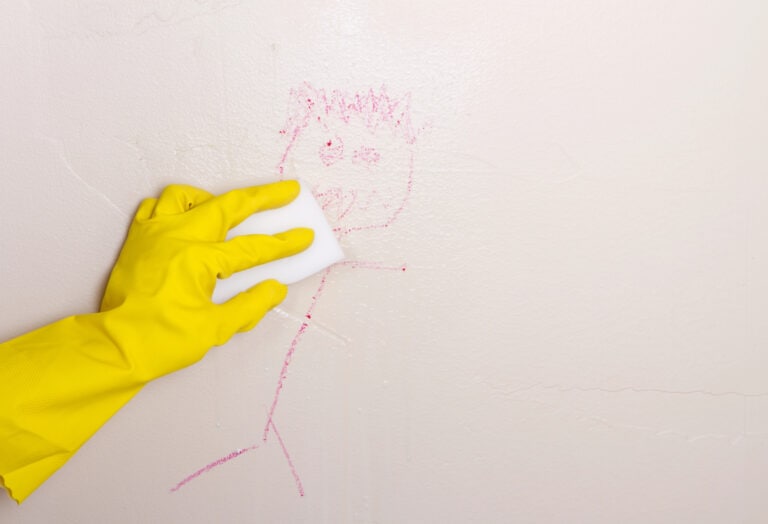
Crayon, Marker, and Difficult Stains
Avoid immediately reaching for the strongest household cleaner.
Some products that remove stains effectively can also affect the paint’s color or sheen. Test any cleaner before using it on a visible area and follow the paint manufacturer’s care recommendations whenever possible.
If removing the stain also removes or changes the paint, touching up the area may produce a better result than continuing to scrub.
Can You Clean Painted Walls With Vinegar?
Diluted vinegar is sometimes recommended for cleaning walls, particularly for tougher grime, but it is not necessary for most routine cleaning.
Warm water and mild dish soap should generally be your first choice.
If you decide to use another cleaning solution, test it on a hidden section of the wall first. Paint formulas and finishes vary, and a cleaner that works well on one painted surface may affect another.
When in doubt, use the gentlest method available.
How Do You Clean Painted Walls Without Leaving Streaks?
Streaking usually happens when too much water or cleaning solution remains on the surface.
To reduce streaks:
- Wring out your cloth or sponge thoroughly.
- Clean small sections at a time.
- Do not let dirty water run down the wall.
- Rinse away soap residue with clean water.
- Change your rinse water when it becomes dirty.
- Use a clean microfiber cloth to remove excess moisture.
- Allow the wall to dry evenly.
Avoid repeatedly washing an area while it is still wet.
What About Newly Painted Walls?
Fresh paint may feel dry long before it has fully hardened.
Avoid washing a newly painted wall too soon. Follow the curing and cleaning instructions provided by the paint manufacturer before using water, soap, or cleaning products on the surface.
Taking proper care of your walls after an interior painting project can help preserve the color and finish for longer.
When Cleaning Is Not Enough
Sometimes what looks like dirt is actually wear or damage to the paint.
You may need a paint touch-up instead of additional cleaning if you notice:
- Permanent discoloration
- Paint worn away from repeated cleaning
- Chips or peeling
- Scratches through the paint
- Areas where the sheen has changed
- Stains that continue to show after gentle cleaning
Whenever possible, use the same paint color, product, sheen, and application method originally used on the wall.
A touch-up may still appear slightly different if the existing paint has aged, faded, or been exposed to different lighting conditions. In those situations, repainting a larger section or the entire wall can create a more consistent finish.
How Often Should You Clean Painted Walls?
You usually do not need to wash every wall in your home frequently.
Instead, remove dust periodically and spot-clean marks as they appear. High-traffic areas such as kitchens, hallways, entryways, children’s rooms, and stairwells may need attention more often.
A more thorough cleaning can be done when walls begin to look dull or dirty.
Gentle, occasional cleaning is better than repeatedly scrubbing painted surfaces.
Keep Your Interior Walls Looking Their Best
Knowing how to clean painted walls properly can help you remove everyday dirt and marks without unnecessarily damaging the finish. Start with water, use mild soap only when needed, pay attention to the paint sheen, and always test your cleaning method before tackling a large area.
If cleaning and touch-ups are no longer enough to restore your walls, a new coat of paint may be the better solution.
Two Brothers Painting provides professional interior painting for homeowners throughout Rhode Island. Whether you need to refresh a single room or update your home’s entire interior, request a painting estimate and let us help give your walls a clean, professionally finished look.
Frequently Asked Questions
What is the best way to clean painted walls?
Start by dusting the wall, then wipe it gently with a microfiber cloth or nonabrasive sponge dampened with warm water. If water alone does not remove the dirt, add a small amount of mild dish soap. Test the method on a hidden area first.
What is the best cleaner for painted walls?
For routine cleaning, warm water and mild, dye-free dish soap are generally enough. Avoid starting with harsh chemicals or abrasive products, especially on flat or matte finishes.
How do you wash painted walls without removing paint?
Use minimal moisture, a soft microfiber cloth, and light pressure. Avoid abrasive scrubbers and test your cleaning method in an inconspicuous area before washing a visible section.
Can I use dish soap to clean painted walls?
Yes. A small amount of mild dish soap mixed with warm water can help remove everyday grime and fingerprints. Use a damp rather than soaking-wet cloth and rinse away any soap residue afterward.
Can you use baking soda on painted walls?
Baking soda may help with stubborn marks, but it is mildly abrasive. Use it carefully, test it first, and avoid aggressive rubbing, particularly on flat or matte paint.
Free Painting Estimate
Do not fill this form out if you’re a solicitor.