

What Is the True Cost of a Cheap Painting Job?
A cheap painting job can cost more over time because skipped preparation, low-quality materials, or poor application may lead to peeling, cracking, moisture damage, wood rot, and earlier repainting. Professional exterior painting helps protect Rhode Island homes by improving adhesion, durability, weather resistance, and the lifespan of the finish.
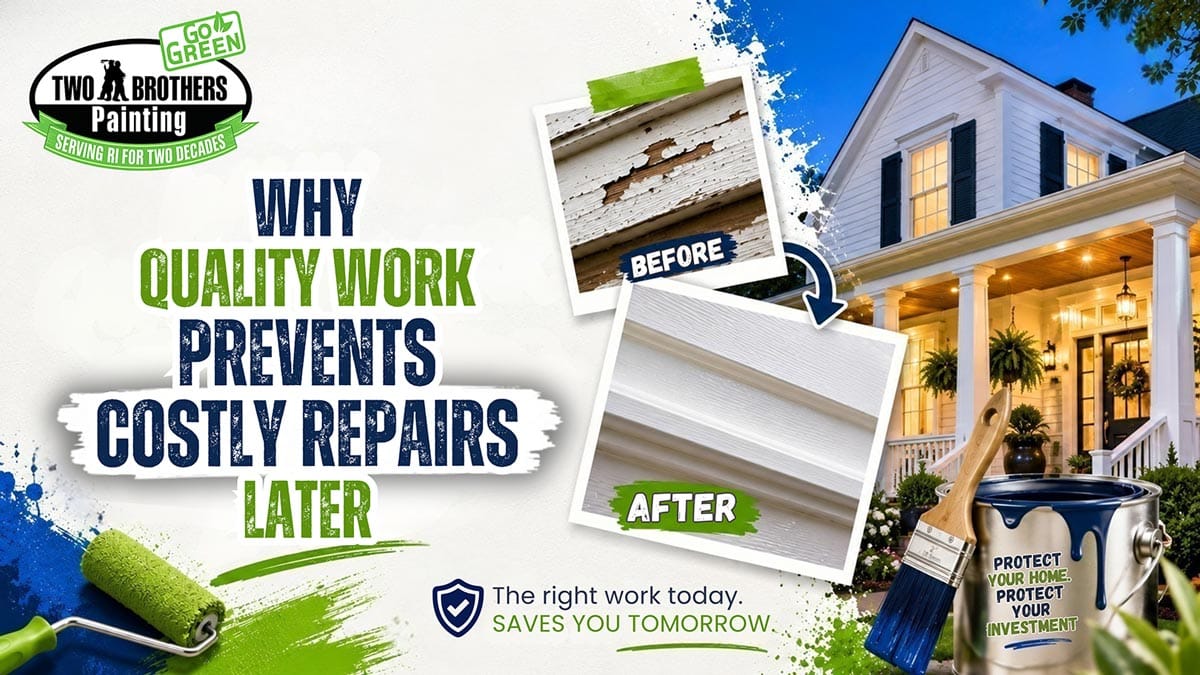
DIY painting looks so simple online — simply grab a few cans of paint, watch a couple of YouTube tutorials, clear your weekend, and suddenly it feels like anyone can pull it off. But putting exterior painting into your own hands to save money can end up costing more than hiring it out from the start. When it comes down to it, quality, professional work is what actually protects your investment, especially in a climate as demanding as Rhode Island’s.
Why DIY Painting Seems Like an Easy Win
We get the appeal. A DIY project means lower upfront costs, full control over your timeline, and that classic “how hard can it be?” confidence. But most homeowners underestimate just how much time, physical effort, and technique a quality paint job actually requires.
Painting looks straightforward from the outside — but the result depends on details most people don’t know to look for. That’s exactly why trained expertise matters so much, and why the cost of a cheap painting job often shows up later, not on day one.
Where Professional Expertise Really Shows Up
When you hire a professional, what you’re paying for is more than labor; you’re paying for the expertise that turns a paint job into one that actually lasts
- Proper surface prep: A step that most homeowners often overlook but makes all the difference in how long a paint job lasts. It involves:
- Scraping away old, flaking paint
- Sanding rough spots smooth
- Repairing any damaged wood
- Caulking gaps around windows and trim
- Priming bare surfaces so the paint has something solid to hold onto
- Reading the weather: Painting in the wrong humidity or temperature can undo an otherwise perfect job, which is why professionals know how to time their work around the conditions rather than the calendar.
- Choosing the right paint: Selecting the right type, sheen, and quality makes a real difference in how well a paint job holds up, especially when it’s matched to Rhode Island’s climate.
- Real skills in applying paint: From even coverage to proper drying time between coats, this is where craftsmanship shows — and where shortcuts tend to show up first.
None of this is about pointing out what DIYers get wrong. It’s about showing just how much craftsmanship goes into a paint job built to last — and why that craftsmanship matters even more once you factor in our coastal climate.
How Coastal Weather Tests Every Paint Job
If you live here, you already know: Rhode Island weather is no joke. The salty coastal air eats away at exterior surfaces faster than most people expect. Sticky summer humidity works its way into anything that isn’t fully sealed. Powerful Nor’easters drive rain sideways, finding their way into the smallest cracks and seams. And come winter, repeated freezing and thawing put constant stress on wood, slowly pulling apart any weak spot that was left unaddressed.
This is exactly why professional-grade prep and materials matter so much here. A paint job that might survive a mild climate with minor shortcuts simply won’t hold up along the Rhode Island coast — any corners cut early on don’t just disappear; they resurface as peeling, cracking, or water damage that costs far more to fix than it would have to do right the first time.
Why Hire a Professional Painter
So, why hire a professional painter instead of tackling it yourself? Because professionals bring trained technique, the right equipment, and real experience reading local conditions — all things that take years to develop. They understand how painting quality and home durability are connected, and how the right prep and product choices directly affect how long your paint job lasts.
There’s another layer to that expertise worth mentioning: professional painters back their work with warranties and guarantees, something a DIY project simply can’t offer. And beyond the peace of mind, hiring a pro saves you time and delivers consistent, reliable results from the very first coat. Add in the time you save and the consistent, reliable results you get from the very first coat, and it’s easy to see why that expertise is worth paying for.
The Long-Term Payoff of Hiring a Professional
When you invest in professional work, you’re investing in results that last. Instead of paint failing within a year or two, a quality job can hold up for 7–10 years. That means real protection against water intrusion, wood rot, and mold — the kinds of issues that turn a simple touch-up into a major repair.
It also means fewer repaints over time, which protects both your curb appeal and your home’s value. And let’s not forget the hassle-free experience: hiring a professional means skipping the ladder, the guesswork, and the risk that comes with tackling exterior painting on your own.
Quality Work Is an Investment
Hiring a professional painter isn’t an added expense — it’s protection for your home and your time. When you weigh cheap vs. professional exterior painting, the real difference isn’t in the price tag today, but in the years of protection, durability, and curb appeal you get afterward. That’s the trade-off worth making: spending a little more on expertise now saves you far more down the road.
Here in Rhode Island, that trade-off matters even more. Between the salt air, humidity, and freeze-thaw winters, a paint job that skips steps or uses lower-grade materials simply won’t hold up the way a properly done one will — which is exactly why doing it right the first time makes such a difference.
That’s the standard that Two Brothers Painting holds every project to. Contact us today for a free estimate and see how quality work now can mean fewer repairs and more savings later.
Frequently Asked Questions
What is the true cost of a cheap painting job?
The cost of a cheap painting job often appears later through peeling paint, cracking, moisture damage, wood rot, and earlier repainting. Correcting these problems may cost more than hiring a professional painter from the beginning.
Why should I hire a professional painter?
Professional painters bring proper equipment, surface-preparation knowledge, trained application skills, and experience working in local weather conditions. They can also recommend suitable products and provide more consistent results.
Is DIY exterior painting actually cheaper?
DIY exterior painting may cost less upfront, but homeowners must also pay for paint, tools, ladders, safety equipment, preparation materials, and repairs. Mistakes or premature paint failure can increase the total cost.
What happens when exterior surfaces are not prepared properly?
Paint may not adhere correctly to dirty, damaged, peeling, or unprimed surfaces. This can cause bubbling, cracking, peeling, uneven coverage, and moisture problems.
Can a poor paint job cause costly home repairs?
Yes. Gaps, exposed wood, failing caulk, and poorly prepared surfaces may allow moisture to reach the materials underneath. Over time, this can contribute to wood rot, mold, and more extensive repairs.
How does Rhode Island weather affect exterior paint?
Salt air, humidity, rain, freezing temperatures, and freeze-thaw cycles can place additional stress on exterior surfaces. Proper preparation and suitable exterior paint help the finish withstand these conditions.
How long can a professional exterior paint job last?
A quality exterior paint job can often last seven to ten years. The actual lifespan depends on the surface condition, preparation, paint quality, weather exposure, maintenance, and application.
What should I look for when hiring a professional painter?
Look for a painter who clearly explains the preparation process, repairs, products, number of coats, project timeline, cleanup, insurance, payment terms, and warranty coverage.
Free Painting Estimate
Do not fill this form out if you’re a solicitor.