

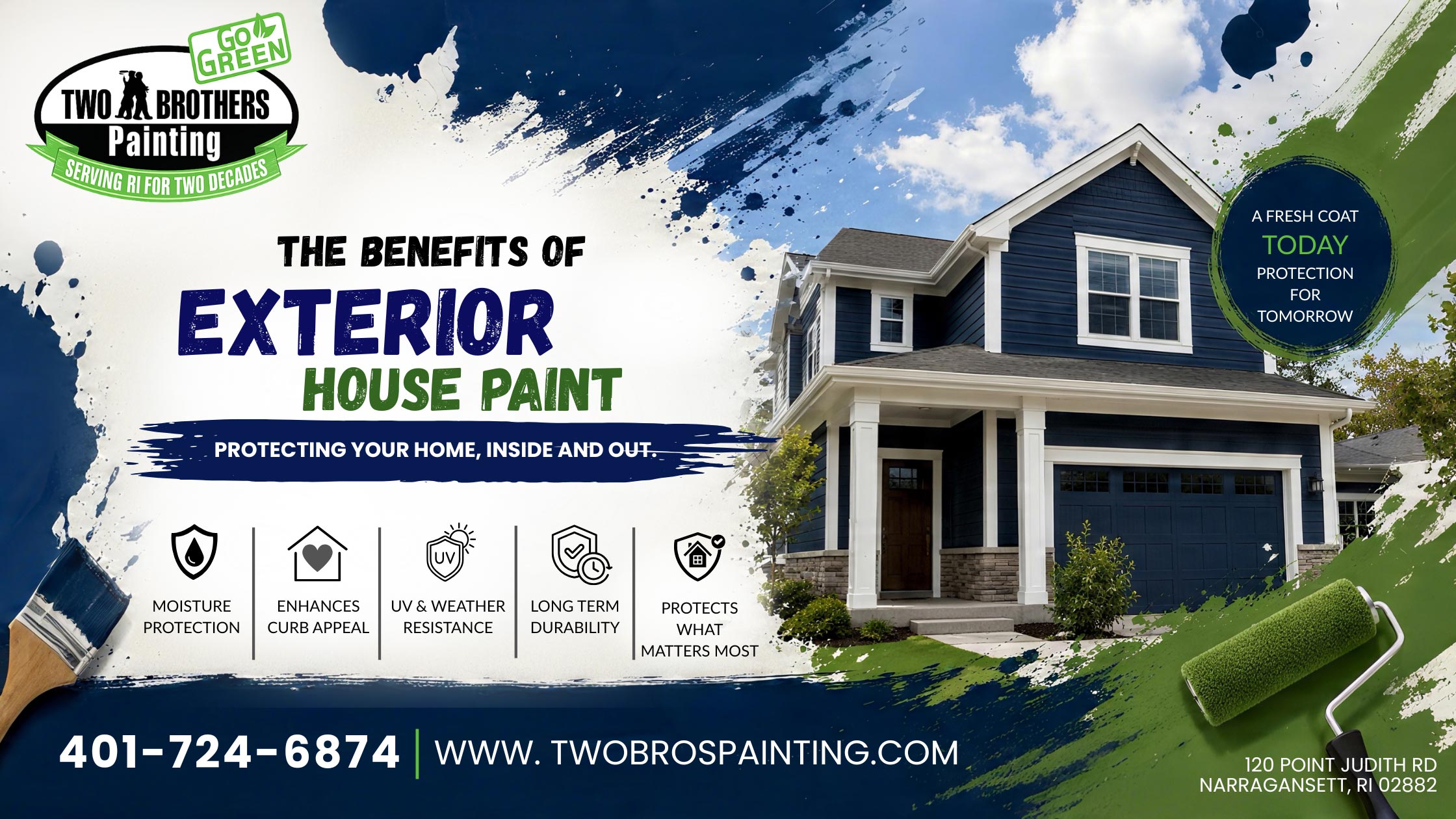
The Benefits of Exterior House Paint for Home Protection
Exterior paint does more than refresh your home’s appearance. It helps protect siding, trim, and interior spaces from moisture, rot, mold, and sun damage. For Rhode Island homes, a quality paint job is an important part of long-term home protection.
Painting is More than Color: Benefits of Exterior House Paint
Most homeowners think of exterior paint as something that makes a house look fresh and inviting. But long before it improves curb appeal, paint is quietly protecting your biggest investment from moisture, sun damage, mold, and the harsh New England weather. In many ways, a quality paint job is your home’s first line of defense.
The real benefits of exterior house paint go far beyond what meets the eye. A quality paint job is one of the most important investments you can make to protect your home. Here in Rhode Island, that protection isn’t just nice to have; it’s essential!
How Paint Protects Your Home from the Outside In
Think of exterior paint as your home’s first line of defense. Every day, your siding, trim, and wood surfaces are exposed to the elements: sun, rain, wind, and everything in between. Without a proper protective coating, those surfaces begin to break down faster than you’d think.
Understanding how paint protects your home starts with what happens before serious damage occurs. Take a scenario many Rhode Island homeowners know all too well: a patch of paint starts peeling on the side of the house. Easy to ignore at first, right? But that small bubble or crack is now an open door for water.
Once moisture gets beneath the surface, it doesn’t stop. It seeps into the wood, begins the cycle of rot, and creates the warm, damp conditions that mold and mildew love. Before you know it, what looked like a minor touch-up has turned into a major repair bill.
The good news? A professionally applied exterior paint system dramatically reduces the risk of moisture intrusion, peeling, and premature deterioration — helping you avoid costly repairs and extend the life of your home’s exterior.
A Quality Paint Job Starts Before the Paint Goes On
Before a single drop of paint goes on, there’s real work to be done; that’s exactly where quality starts. Most homeowners don’t realize that paint itself isn’t the whole job — proper prep is what makes it last. A reputable painting contractor in Rhode Island knows that great exterior home maintenance doesn’t skip steps, which means this checklist gets checked off completely before the topcoat goes on:
- Scraping peeling paint: Loose or flaking paint has to come off completely; painting over it only delays the inevitable
- Sanding: Smooths out rough edges and gives the new paint a clean surface to bond to
- Repairing damaged wood: Soft spots and rot should be fixed, not hidden under a fresh coat
- Caulking gaps: Seals openings around windows, doors, and trim where water and air sneak in
- Priming bare surfaces: Helps paint adhere properly and ensures even coverage that holds up over time
Each step builds the foundation for paint that actually holds up. Skipping any of it is where cheap jobs fail fast. Professional exterior painting is as much about what happens before the brush hits the wall as what happens after.
Rhode Island Weather is No Joke
While living on the coast has its perks, it also puts your home through a gauntlet. Between salty ocean air, humid summers, Nor’easters, and freezing winter temperatures, Rhode Island homes take a beating year-round. That combination is particularly harsh on exterior surfaces.
Salt air is corrosive. It accelerates the breakdown of paint films and can cause metal components like gutters, flashing, and fasteners to rust faster. Humidity drives moisture into any unprotected surface it can find. And freeze-thaw cycles in winter? They expand and contract wood and other materials, making existing cracks wider over time.
This is exactly why painting your house is important in the coastal New England climate and why cutting corners on exterior paint maintenance can cost you significantly more down the line.
The Science Behind the Shield: Moisture, Mold, and UV Protection
A high-quality exterior paint system does several things at once. First, it acts as an exterior paint moisture barrier, preventing water intrusion that leads to wood rot, mold growth, and interior damage. When water gets into your walls, it doesn’t stay there; it travels, and the damage it causes can eventually compromise insulation, drywall, and even framing. In Rhode Island, where heavy rain and humid summers are the norm, a moisture barrier isn’t just a bonus — it’s the difference between a home that holds up and one that silently deteriorates.
Second, exterior paint blocks UV radiation. The sun’s rays break down organic materials over time, fading colors and degrading the structural integrity of wood and composite siding. Quality paints contain UV inhibitors that slow this process considerably, extending the life of your siding and trim by years.
And don’t underestimate how well house paint protects interior spaces. A well-sealed exterior means your insulation performs better, your energy bills stay lower, and the interior of your walls stays dry — free from the mold and mildew that can affect air quality and your family’s health.
Is It Time to Repaint? Signs to Watch For
Not sure if your home is due for a fresh coat? Here are some clear signals:
- Peeling, bubbling, or cracking paint — moisture is likely already getting in
- Faded or chalky surfaces — UV damage has broken down the paint film
- Visible wood grain or bare spots — the surface is unprotected
- Mold or mildew staining on siding or trim
- Soft or spongy wood around windows, doors, or trim boards — a sign that rot has set in
- It’s been more than 7–10 years since the last professional paint job
If any of these sound familiar, it’s time to take action before small issues become big ones. And here’s something worth keeping in mind: the decision to repaint your house isn’t just about prevention. Professional exterior painting services can meaningfully boost your home’s curb appeal and market value. And if you ever decide to sell, a crisp, clean exterior signals to buyers that the home has been well cared for. It’s one of the simplest upgrades you can make with one of the strongest returns.
Paint as Home Protection: An Investment Worth Making
It’s easy to view a paint job as an aesthetic expense. But when you consider what it prevents: water damage, wood rot, mold remediation, and premature siding replacement, paint as home protection is one of the highest ROI a homeowner can make. When done right, exterior house painting can protect your wood siding and trim by 5–10 years; when you consider what replacement costs, that’s a number worth paying attention to.
Your home’s exterior works hard every day to protect everything inside it. The right paint system helps it do that job for years to come. At Two Brothers Painting, we understand Rhode Island homes because we work and live here too. We know what coastal weather demands and what quality workmanship looks like. Whether your home needs a full repaint or you’re just starting to notice signs of wear, our team can help you protect your investment with quality workmanship built to withstand Rhode Island’s climate.
Contact us today for a free estimate.
Frequently Asked Questions
How does exterior paint protect your home?
Exterior paint helps protect siding, trim, and wood surfaces from moisture, sunlight, mold, and weather exposure. When applied correctly, it creates a protective coating that slows wear and helps your home’s exterior last longer. Learn more about how paint protects your home.
How often should you repaint your house in Rhode Island?
Most homes need repainting every 5 to 10 years, depending on the surface, paint quality, prep work, and weather exposure. In Rhode Island, coastal air, humidity, and winter conditions may cause some homes to need repainting sooner. Here are more signs of when you should repaint your home.
Can peeling paint lead to wood rot?
Yes. Peeling paint can expose the wood underneath to moisture. If water keeps entering the surface, it can contribute to soft wood, mildew, and wood rot. This is why it helps to know how to spot wood rot before it spreads.
Does exterior paint help prevent moisture damage?
Yes. A quality exterior paint system can help reduce moisture intrusion when the surface is properly prepared, primed, caulked, and painted. It works best as part of regular exterior home maintenance.
Why hire professional exterior painters instead of painting yourself?
Professional painters know how to inspect, prepare, repair, prime, and paint exterior surfaces correctly. Proper prep helps the paint bond better, last longer, and reduce the risk of peeling, moisture damage, and costly repairs. This is one reason professional exterior painters can be worth considering.
Free Painting Estimate
Do not fill this form out if you’re a solicitor.