

Why Does Exterior Paint Wear Out Faster Near the Coast?
Exterior paint wears out faster near the Rhode Island coast because it is constantly exposed to salt air, high humidity, strong sunlight, wind-driven moisture, and freeze-thaw cycles. These conditions weaken the paint’s protective bond, causing fading, chalking, cracking, bubbling, and peeling. Once the coating fails, moisture can reach the siding and lead to mold, wood rot, rust, and structural damage.
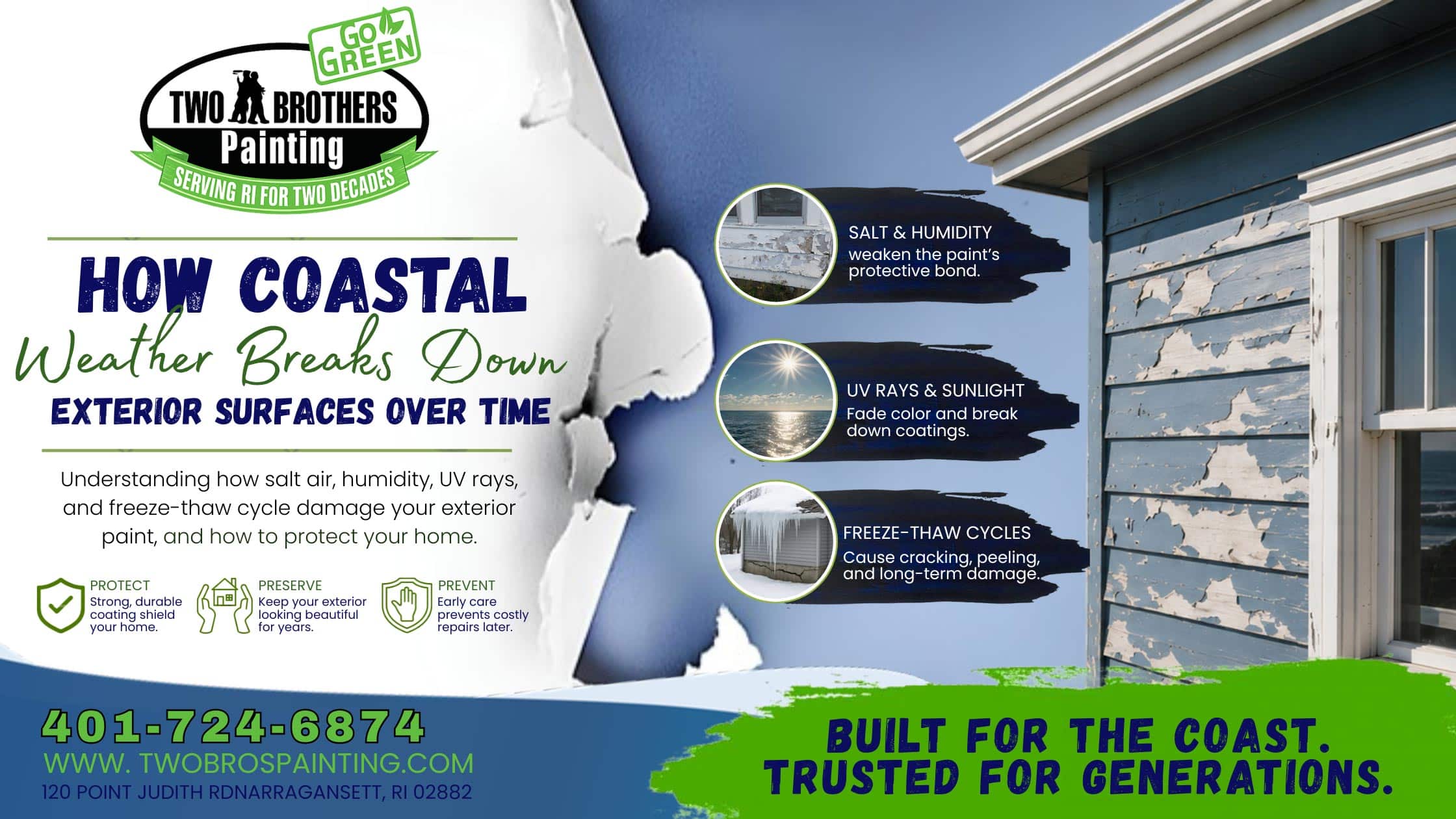
Life near the Rhode Island coast is pretty great. Salty air, ocean breezes, that shoreline feel—it’s why we love it here. But there’s a flip side: that same relaxing air is tough on your home’s paint.
Coastal weather exterior paint damage is real; it’s common around here, and it happens faster than most homeowners expect. So what’s going on, exactly? Let’s break it down.
How Weather Affects Your Exterior Paint (More Than You’d Think)
It’s easy to think of paint as just a finishing touch, but it’s really your home’s protective layer. Out here near the coast, that layer gets tested daily.
Here’s how weather affects exterior paint on a coastal home:
- Salt air lands on your siding and trim every day, slowly wearing down the paint.
- Humidity pushes moisture into every little crack it can find, softening the paint and inviting mold.
- UV rays are especially intense near the water, causing paint to fade and break down much faster than many homeowners realize.
- Freeze-thaw cycles in the winter make wood expand and shrink, which stresses paint until it cracks.
These conditions rarely happen one at a time. Salt, moisture, sunlight, and temperature swings all work together, accelerating paint failure much faster than they would inland. That’s why exterior paint durability in our coastal climate is so different from that of a typical inland home.
Signs of Exterior Paint Wear and Tear to Watch For
The good news is that your home usually gives you warning signs before serious damage develops. Here’s what you have to look for:
- Chalky residue when you run your hand across the surface (a telltale sign of UV breakdown)
- Peeling or bubbling paint, especially on sun-facing or ocean-facing walls
- Fading that seems uneven, often worse on the side that catches the most wind and salt spray
- Small cracks near seams, trim, or joints where moisture sneaks in first
- Rust streaks near nail heads or metal fixtures
- Soft or spongy wood when pressed—an early indicator of rot beneath the surface
Catching these signs early is the difference between a simple touch-up and a full siding repair. If you notice any of them, don’t wait for “later this year.” Small windows of exterior paint wear and tear turn into expensive problems fast when the coastal climate is involved.
Why Catching It Early Really Matters
Here’s the thing about weather damage to house paint: it doesn’t stay small. What starts as a tiny crack or a faded patch is your house’s way of asking for help. Ignore it, and the coast won’t be kind about it.
That’s because your exterior paint’s job is to seal your siding and keep water on the outside, where it belongs. When that seal starts to fail, water begins working its way into the wood almost immediately. It works its way into the wood and settles in, and our coastal humidity keeps it from drying out.
Give it a season or two, and you’re not just looking at a paint job anymore—you’re looking at rot, mold, or even damaged siding that needs to be replaced.
It’s easy to see why waiting isn’t worth it once you look at how fast small damage adds up:
- A small crack today can mean rotted wood underneath in a year.
- A little peeling paint can turn into mold you can smell before you can see.
- A faded patch left alone speeds up wear on the wood right beneath it.
Fixing a small problem is usually simple—a touch-up, some caulking, or fresh paint on one area. On the other hand, a big problem means replacing boards, dealing with mold, or repainting the whole house sooner than planned. Acting fast isn’t about being extra careful. It’s about saving time, money, and a bigger headache down the road.
Rhode Island Coastal Home Painting Isn’t a One-Size-Fits-All Job
Not every painting contractor understands what your home is actually up against. Rhode Island coastal home painting requires specific know-how: the right primers, the right paint formulations, and application techniques built for salt, humidity, and temperature swings.
That skill set usually comes down to experience. A contractor who mostly works inland might use products and methods that hold up just fine in a low-humidity, low-salt environment—but fall short near the coast. That’s where local experience matters. A painter who’s worked on shoreline homes for years knows which products resist salt corrosion, how to time projects around humidity levels, and where coastal homes are most vulnerable to damage.
What to Do Next
If you’re seeing any of the early warning signs of exterior paint damage, the smartest move is a professional evaluation before small issues become big repairs. Quality inspection will show you what your home really needs—whether it’s a simple refresh or more extensive prep work. A local contractor who understands coastal weather takes that information and builds a plan that actually works.
At Two Brothers Painting, we live and work right here in Rhode Island, so we know exactly what our coastal climate demands. We’ve seen firsthand how salt air, sun, and seasonal swings affect exterior surfaces, and we use products and techniques built to stand up to it all.
If you’re noticing peeling paint, fading, cracking, or signs of moisture damage, now is the best time to have it evaluated. Catching problems early can often prevent much more expensive repairs later.
At Two Brothers Painting, we’ve helped Rhode Island homeowners protect their homes from the unique challenges of our coastal climate for years. From proper surface preparation to premium coatings designed for shoreline conditions, we know what it takes to make an exterior paint job last.
Schedule your free exterior evaluation today, and we’ll help you determine exactly what your home needs to stay protected for years to come.
Frequently Asked Questions
How does salt air damage exterior house paint?
Salt particles collect on siding and trim, where they can weaken the paint film and attract moisture. Over time, this exposure may contribute to chalking, fading, peeling, and corrosion around metal fasteners. Regular cleaning and properly selected exterior coatings can help reduce the effects of salt buildup.
Why does exterior paint peel faster near the ocean?
Exterior paint may peel faster near the ocean because coastal homes experience frequent humidity, salt exposure, wind-driven rain, strong sunlight, and temperature changes. These conditions can reduce adhesion and allow moisture to become trapped beneath the paint.
What are the first signs of coastal weather exterior paint damage?
Early signs include fading, chalky residue, small cracks, failed caulking, bubbling, rust stains, and peeling around trim or joints. These problems should be inspected early because they may allow moisture to reach the siding underneath.
Can coastal weather cause wood rot beneath painted siding?
Yes. When cracked or peeling paint allows moisture to enter the wood, coastal humidity can slow the drying process. Continued exposure may eventually lead to soft wood, mold, swelling, and rot.
What type of exterior paint is best for Rhode Island coastal homes?
The best coating depends on the siding material, existing paint condition, amount of exposure, and moisture level. In general, coastal homes benefit from high-quality exterior coatings that resist moisture, UV damage, mildew, and temperature changes. Proper preparation and primer selection are just as important as the final paint.
How can I improve exterior paint durability in a coastal climate?
Keep the exterior clean, remove visible salt buildup, maintain gutters, repair failed caulking, address peeling areas quickly, and inspect the home regularly. Professional surface preparation and applying the right coating under suitable weather conditions can also improve durability.
When should I call a professional painter about exterior damage?
Contact a professional when you notice widespread peeling, recurring bubbling, soft wood, rust stains, mildew, damaged caulking, or areas that remain damp. An evaluation can determine whether the problem is limited to the paint or has already affected the siding beneath it.
Free Painting Estimate
Do not fill this form out if you’re a solicitor.