

Painting your home’s interior or exterior can freshen up a space, boost property value, and make your Rhode Island home feel brand new. Professional interior and exterior painting services help ensure those results last.
But here is the truth most homeowners don’t realize right away. Most paint jobs fail before the first coat even hits the wall because the surface was not properly prepared.
In coastal communities like Newport, RI and Narragansett, RI, salt air and humidity are a paint job’s worst enemies. A $100 gallon of paint is only as good as the $5 of sanding that happens before it.
Surface paint preparation is the quiet hero of every lasting paint job. It is not glamorous. You don’t see it in before-and-after photos. But without it, even the most premium paint and tools can’t stick, protect, or perform like they should. This post walks you through why prep matters, what it involves, and how you can make sure your next paint project holds up to Rhode Island’s coastal weather and daily wear.
Table of Contents
- What Does “Prep” Really Mean
- Why Prep Is More Important Than Paint
- Rhode Island Weather and Surface Prep
- The Key Steps in Proper Surface Preparation
- Common Prep Mistakes That Cause Paint Failure
- How Professionals Make the Difference
- FAQ: Simple Questions Homeowners Ask
What Does “Prep” Really Mean
When professionals talk about prep, they mean all the work done before the roller or brush ever touches the surface. At its core, prep ensures that the paint has a clean, stable, and receptive surface to cling to. This means cleaning, sanding, repairing, priming, and masking areas that need protection.
An authoritative guide on surface preparation from Sherwin-Williams makes it clear that prep is absolutely essential for a long-lasting result. Without cleaning, smoothing, and priming the surface, paint simply cannot adhere properly and will likely fail.
Why Prep Is More Important Than Paint
You can buy the most expensive paint in the store, but if you skip surface paint preparation, you’re wasting money. Prep ensures:
- Better Adhesion
If surfaces are dirty, dusty, or oily, paint won’t stick. Clean, smooth surfaces give paint particles something solid to grab on to. - Greater Longevity
Poor prep leads to bubbling, peeling, cracking, or flaking — especially in high-moisture areas like kitchens, bathrooms, or exterior facades. - Professional Finish
Uneven walls, nail holes, bumps, or old peeling paint will show through if they are not addressed. Proper prep smooths everything out before the first coat.
So the truth is clear: paint cannot mask poor prep. It only amplifies underlying flaws.
Rhode Island Weather and Surface Prep
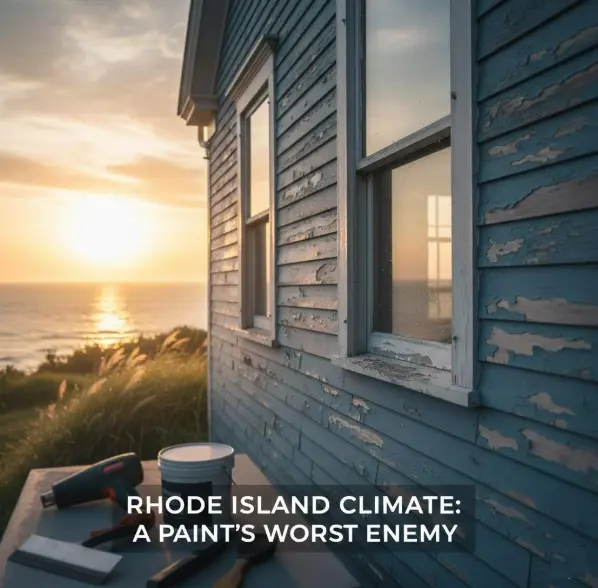
Rhode Island sees its fair share of coastal humidity, rain, and temperature swings. These conditions make prep even more critical.
Moisture from the Narragansett Bay and Atlantic breezes can encourage peeling and blistering paint if surfaces are not dried and sealed properly. Warm summers and chilly winters also make it harder for paint to cure if walls or trim are not fully ready. Good prep work accounts for climate, humidity, and temperature before anything gets painted.
The Key Steps in Proper Surface Preparation
Here’s a practical, homeowner-friendly breakdown of what goes into professional surface prep:
Cleaning and Drying
All dirt, mildew, chalky residue, and stubborn dust must be removed. This often involves washing walls or trim and letting them dry completely.
Sanding and Repair
Old paint that is cracked or peeling is scraped off, and rough patches are sanded smooth. Cracks, holes, and dents are filled, sanded again, and checked.
Priming
Primer is more than just paint under paint. It seals the surface, blocks stains, evens out porous areas, and greatly improves adhesion for the topcoat.
Masking and Protection
Trim, windows, fixtures, and floors are covered to keep them clean. This is a detail many DIYers skip, but it makes the finished job crisp and professional.
Each of these steps takes time, skill, and the right tools — which is exactly why professionals invest so much effort before laying down the first coat.
Common Prep Mistakes That Cause Paint Failure
Even well-intentioned homeowners and painters sometimes short-change prep. The most common mistakes include:
- Cleaning only superficially and missing embedded grime.
- Skipping sanding and filling cracks or holes.
- Forgetting primer or using the wrong type.
- Painting too soon after cleaning or under bad weather conditions.
- Rushing the process.
These shortcuts may save minutes, but they often cost years off the life of your paint job.
How Professionals Make the Difference
At Two Brothers Painting, our team knows that a great paint job starts with preparation. We take the time to assess every surface, plan for Rhode Island weather conditions, and address issues most homeowners don’t think about.
When you choose professionals who value prep, you get:
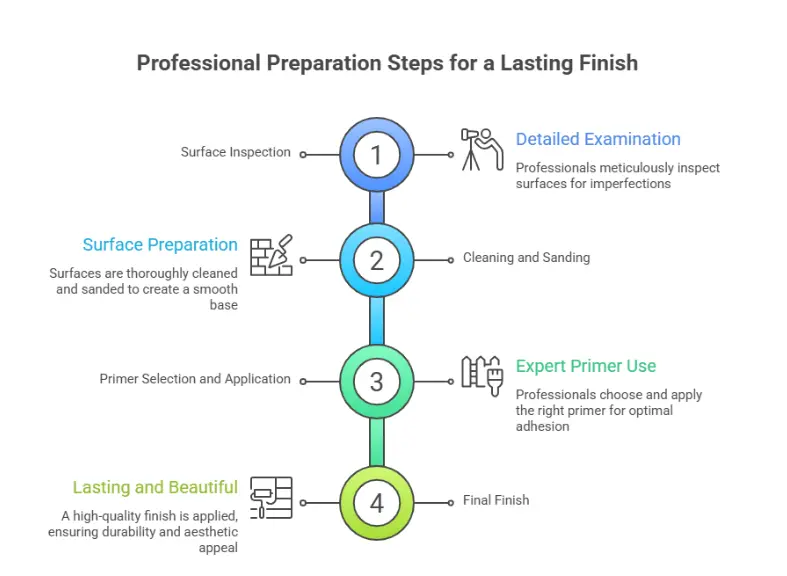
- Detailed surface inspection
- Proper cleaning and sanding
- Expert primer selection and application
- A finish that lasts and looks great
We don’t cut corners. We build lasting results.
FAQ: Simple Questions Homeowners Ask
Q: Why do you need a primer?
A: Primer seals and prepares the surface so paint can bond more effectively. It also evens out porous or repaired areas.
Q: Can I paint without sanding?
A: If surfaces are rough or old paint is peeling, sanding is critical. Without it, new paint may fail.
Q: Does surface prep save money?
A: Yes. Proper prep extends the life of your paint and prevents costly repairs later.
Q: How long does prep take?
A: It varies by project size and condition. Most professional prep takes longer than the actual painting.
Q: Can I prep myself?
A: Basic cleaning and light sanding you can do. But for full prep, especially on exteriors, professionals usually deliver a longer-lasting result.
Final Thoughts
Most paint jobs do not fail because of the paint itself. They fail because the foundation was never properly built. Thinking about prep first helps you avoid weak adhesion, short lifespan, and an unprofessional finish.
Whether you are refreshing a room or repainting your whole Rhode Island home, investing in surface preparation is the single biggest step toward a result you can be proud of.
Ready to see what real prep work looks like? Contact Two Brothers Painting for a free estimate today.
Free Painting Estimate
Do not fill this form out if you’re a solicitor.