

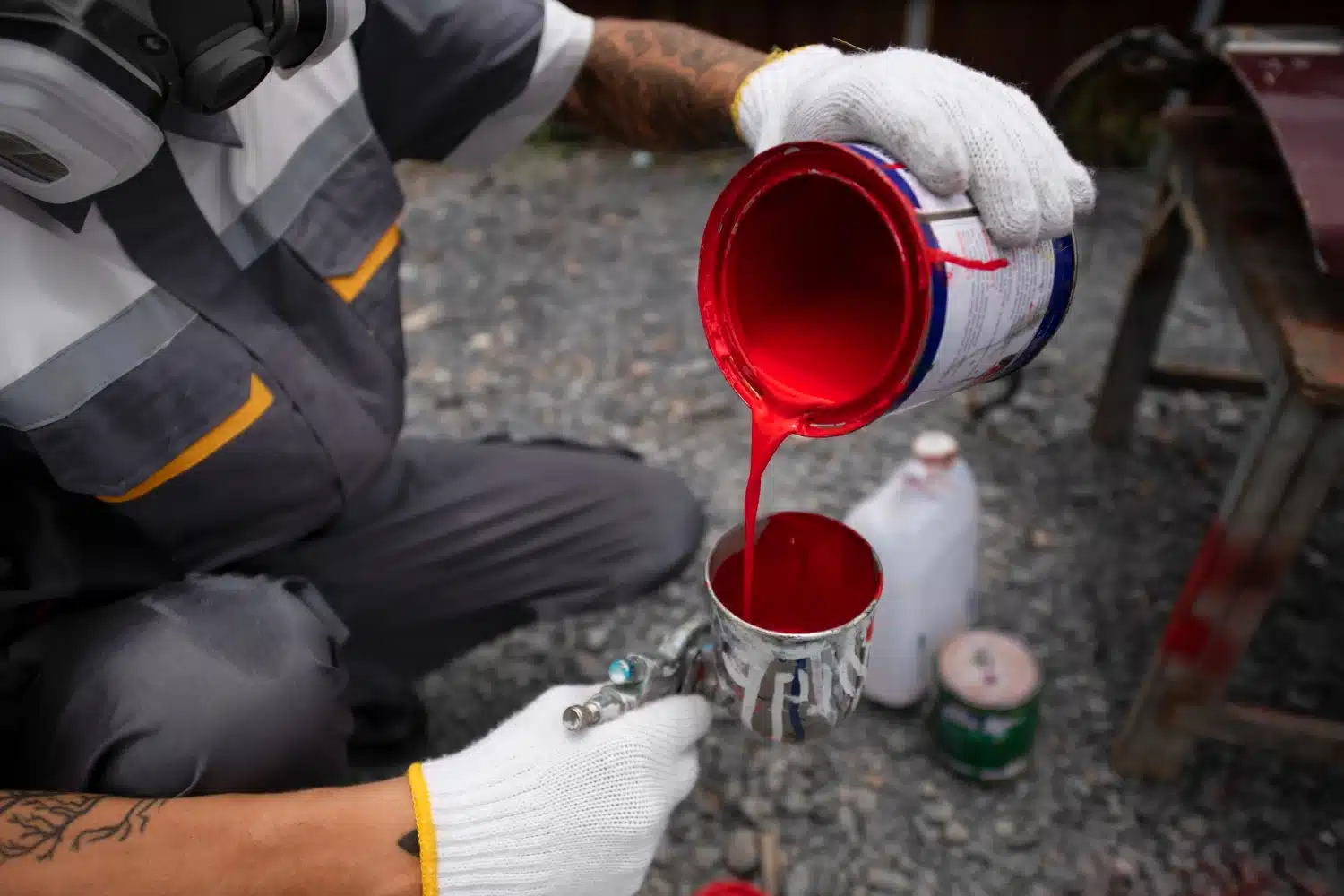
When you compare estimates from different painting contractors, it is common to see variations in pricing. Often, the difference isn’t just about labor rates—it comes down to the quality of the paint being poured into the trays. To get an exterior finish that lasts a decade, you need to understand what you are actually buying.
Every gallon of paint is made of liquid (water and solvents) and solids (binders and pigments). Binders make the paint stick to your siding, while pigments give the paint its color and hide raw wood underneath. When paint is applied to a wall, the liquids evaporate into the air, leaving only the solids behind.
Cheap, builder-grade paints are mostly water. When they dry, very little product remains on your home. This leaves behind a thin, weak layer that quickly cracks, chips, and fades under New England weather.
Premium products are called “high-solids” paints. They feature a high concentration of high-quality resins and thick pigments. When they dry, they leave behind a thick, rugged protective layer that blocks coastal wind, salt air, and heavy moisture. Investing in high-solids formulas protects your home from moisture damage and saves you thousands by preventing frequent repaints.
Free Painting Estimate
Do not fill this form out if you’re a solicitor.